What Is the Best Way to Host a Small Group Game Night in the Living Room?
The best living-room game night is built around one simple idea: make the room do one job at a time. In a small space, that means planning where people sit, where drinks go, how snacks are served, and when the game starts before the first guest rings the bell. A little structure keeps the coffee table from becoming a crowded buffet and saves you from hunting for a game box in another room while everyone waits.
After years of hosting holiday-week hangouts, neighborhood potlucks, and football Sundays, I’ve learned that the room feels larger when guests know where to go and what to expect. Put out coasters, assign a coat spot as people arrive, and say the end time out loud. Then pick games that match the group’s energy and your available window—not just the game you’re personally excited to play.
Start With a One-Room Hosting Plan
For a small gathering, keeping the action in one room is usually easier than letting the party sprawl. Guests can see where to sit, find their drinks, and follow the conversation without drifting between the kitchen, hallway, and living room. Before anyone arrives, decide which parts of the room are for playing, eating, and moving through.
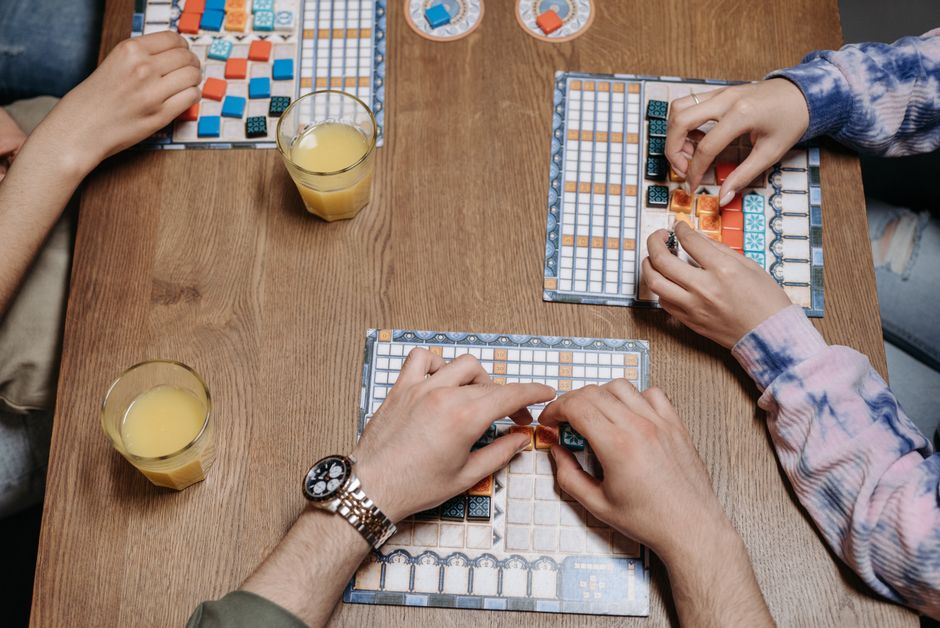
The main play surface should be the center of the plan. A coffee table works well for a compact group, but it can quickly become too low or too crowded if you pile on snacks, glasses, game components, and phones. If a dedicated surface is part of your long-term setup, look at a board game dining table such as The Dresden from Bandpass Design. It’s designed around tabletop play, giving game pieces a more intentional home than a coffee table covered in everyday clutter. You can learn more on the Bandpass Design product page for The Dresden.
You don’t need a new table to host successfully, though. Clear the coffee table completely before setting up, then add only what the chosen game needs. Check that everyone can reach the board without leaning over someone else. If guests will be seated on a sofa and chairs at different heights, try a quick test round of dealing cards or moving pieces to make sure the setup is comfortable.
Give Every Item a Home
Choose designated places for the things that tend to wander. Keep the games you plan to play together in one spot, rather than scattering boxes across rooms. Put a small bin or side table nearby for game components and personal items. Set coasters where guests can see them—I keep a stack ready and treat them like part of the game setup.
A cooler is useful when the fridge is far from the living room or the party is centered around a game. Place it within easy reach but away from the play surface, ideally near a wall or beside the entry to the room. Stock it before guests arrive, and keep a separate spot for empty cans or bottles. That way, refilling drinks doesn’t mean reaching over the board or breaking up a turn to make a kitchen run.
Make Guest Flow Feel Effortless
In a small room, a few thoughtful arrival details prevent awkward traffic jams. When guests come in, point out the coat spot right away. It might be a hook, a bedroom closet, or a clear section of a bed—whatever works in your home. If coats and bags land on the sofa, the best seats disappear before the game even starts.
Next, show people where to put drinks and snacks, and let them know whether food is available right away or after the first game. Clear directions are welcoming, not fussy. They also mean you’re not repeatedly answering, “Where should I put this?” while trying to explain the rules.
Keep the Rules Short and Friendly
Set a few house rules that protect both the game and the mood:
- Drinks stay on coasters or on a side surface—not on top of the board.
- Sticky, greasy, or crumbly food stays away from cards and game pieces.
- Phones are fine, but keep them off the shared play surface.
- Ask before putting an unfinished game away or changing the setup.
- Keep the TV at a level where players can hear each other.
I have a particular dislike for wings and nachos right before a card game. They’re excellent football food, but sauce and game cards are a poor combination. If you’re serving messy snacks, schedule them before the cards come out or during a deliberate break. Put napkins and a place for used plates where guests can reach them without crossing the play area.
Plan the Evening Around the Clock
Football-timed scheduling is a handy model even if nobody is watching a game. Think in blocks: arrivals, food, a main activity, a break, and a finish. On Super Bowl Sunday, for example, kickoff and halftime create natural markers. On an ordinary weeknight, the same structure gives the night momentum and helps you avoid starting a long game when people are ready to leave.
Before inviting people, decide how long you want to host. Then say the end time out loud when guests arrive: “We’ll play until about 9:30, and then I’m wrapping up.” It’s a small kindness. People can relax because they know the plan, and nobody has to pretend they didn’t hear the evening winding down.
If the TV is on for football, agree on the sound level before the game starts. Pick a volume that lets people follow the broadcast without shouting over each other. Avoid turning the volume debate into its own mid-game event; if the group wants to watch closely, pause the board game or choose a title that tolerates interruptions.
Choose Games for Time and Skill Mix
The right game depends on more than the number of players. Consider how long you have, whether anyone is new to tabletop games, how comfortable the group is with competition, and whether the TV or conversation will interrupt attention. A game that takes 20 minutes to teach may not be the best opening choice for guests who arrived hungry and are still taking off their coats.
For mixed experience levels, look for games with simple turns, visible progress, and room for conversation. Cooperative games can help newcomers feel included because players work toward a shared goal. Light party games are useful when the group is still arriving or people may drift in and out. For a focused main event, choose a game whose playtime fits the block you actually have, not the optimistic estimate printed on the box.
Use the “One Main Game, One Backup” Rule
Pick one main game and one backup before the night begins. The main game should suit the group’s time and attention. The backup should be easier to explain or quicker to finish if the first choice isn’t landing. Keep both boxes together so you’re not searching through closets while the room waits.
When guests have different skill levels, explain only the essentials before starting. Teach the goal, the basic turn, and how someone wins. Then show a sample turn if needed. Avoid reciting every edge case before anyone has moved a piece; it can make a welcoming game feel like a training session. Keep the rulebook nearby for questions, but let the group learn the rhythm by playing.
Think About the Surface, Too
Space saving game choices are particularly valuable in a living room. Compact card games, small-box games, and titles with fewer loose components are easier to set up on a coffee table. They also take less space to store between gatherings. If your group likes larger boards or longer campaigns, plan ahead: clear a bigger surface, limit the snack spread, and make sure pieces won’t be knocked off by passing guests.
Match the food to the game format. A casual conversation game can share the room with a snack tray on a side table. A game that needs careful card handling deserves a food break first, followed by clean hands and drinks placed away from the play area. This simple separation keeps the cards clean and lets everyone focus on the game instead of worrying about a spill.
Keep the Room Comfortable Without Overcomplicating It
Living room hosting tips don’t have to mean buying special furniture or decorating for a theme. They’re mostly about removing friction. Leave a clear route from the door to the seating area. Make sure there are enough places to set down a drink. Check the lighting so people can read cards and game text. If someone has to sit on the floor, offer a cushion and make sure the table is reachable.
For a football gathering, keep the TV sightline in mind when arranging seats. For a board-game-focused evening, make the play surface the visual center and keep the television muted or off. Trying to host a serious game and a loud broadcast at the same time can split attention and spark volume arguments. Decide which one is the main event, then let the other take a supporting role.
Beer can be part of the welcome, but it doesn’t need recycling bin party setup to become a production. If you’re offering a few styles, label them or place them together in the cooler so guests can choose without asking you to fetch each one. Beer Connoisseur is a natural source of beer culture and recommendations if you’re looking for ideas to pair with a relaxed game-night menu. Keep the drinks easy to reach, and keep them away from cards and electronics.
A Simple Pre-Guest Checklist
- Clear the coffee table or chosen game surface.
- Put game boxes together and select one main game plus one backup.
- Set out coasters, napkins, and a place for used dishes.
- Assign a coat and bag spot near the entrance.
- Stock the cooler and position it away from the board.
- Choose a snack plan that won’t leave residue on cards.
- Check the lighting, seating, and path through the room.
- Pick a start time, a break point, and an end time.
Make the Room Work for the People in It
A memorable game night doesn’t require a huge living room or an elaborate spread. It needs a clear play area, a sensible flow, games that fit the group, and a host who has thought through the little things. Keep the game boxes together, give drinks a safe home, and separate messy food from delicate components. Use football’s natural pauses as a scheduling guide, and be clear about when the evening begins and ends.
Whether spillproof cups for game night you’re playing at a coffee table or considering a purpose-built board game dining table like The Dresden from Bandpass Design, the goal is the same: help guests settle in quickly and make it easy to enjoy the time together. When the room is organized around the people—not around piles of snacks, scattered boxes, or a volume debate—the game can take center stage.