Birthstone Engagement Ring Ideas That Still Feel Grown-Up
A birthstone engagement ring can feel personal, colorful, and entirely adult. The trick is not to make the stone behave like a traditional diamond; it’s to choose a design that feels considered from every angle, including how it wears on your hand, how it pairs with a wedding band, and what you know about where its materials came from.
After years of working alongside jewelers and bridal ateliers, I’ve seen couples light up over rings that break the usual rules—and seen them regret choices that looked lovely in a photo but snagged every knit sweater. If you’re exploring a birthstone ring or another colored gemstone engagement ring, start with what feels like you, then get practical about the details. These ideas can help you find a ring that tells a story without feeling like a passing trend.
Let the ring traditions that don’t fit go
There’s no rule that an engagement ring has to be a clear diamond, worn on a particular hand, or chosen without the person who’ll wear it. Traditions can be meaningful when you choose them. They’re less meaningful when they turn a joyful decision into a test you didn’t agree to take.
A birthstone is an especially lovely starting point because it comes with a story—but you don’t have to treat a birth month like a strict assignment. You might choose your partner’s stone, your own, the month you met, or a color that reminds you of a place or person. Some couples combine two stones to represent both partners. Others choose a gemstone for its look and build the meaning around it together.
And if the birthstone for your month isn’t your favorite color, you are not required to wear it forever. “Personal” should mean personal to the wearer, not simply correct according to a calendar.
Choose a stone for both its story and its wearability
Colored gemstones vary in hardness, toughness, and how well they tolerate everyday knocks. Those qualities matter for a ring you hope to wear often. Ask a jeweler how the specific stone is suited to daily wear, what care it needs, and whether its setting offers enough protection. A gemstone’s name alone doesn’t tell you the whole story.
Consider the way you use your hands, too. If you work with your hands, wear gloves often, or pull on chunky sweaters, a low-profile design may be more comfortable than a high-set stone with exposed corners. (I keep a running mental list of settings that snag on knits. Prongs that catch on fabric are very much on it.)
- Ask about durability: What everyday wear can the stone handle, and what should you avoid?
- Ask about care: Can it be cleaned at home, and are there cleaners or repair methods to avoid?
- Look at the stone in different light: Color can shift between a shop, a window, and indoor lighting.
- Check the setting: Are the stone’s edges protected, and does the design catch on clothing?
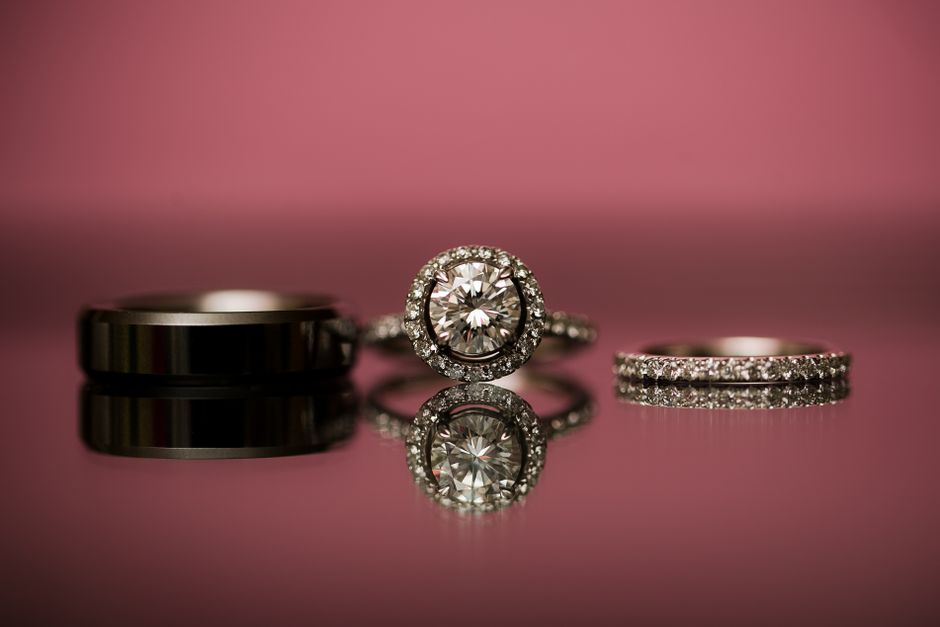
- Try it on with a band: Pay attention to how the rings sit together—and how the band feels between your fingers.
If you’re unsure which options suit your routine, ask for a conversation with a jeweler rather than relying on a photo or a broad “good for daily wear” claim. Practical questions are part of the romance; they’re how you make a ring that works after the proposal, too.
Modern settings that make color feel intentional
A colored stone doesn’t need a complicated design to look special. Often, a clean silhouette gives the gemstone room to be the center of attention. The setting can make the difference between a ring that feels polished and one that feels overly ornate for the person wearing it.
Bezel-set simplicity
A bezel is a rim of metal that surrounds the edge of a stone. It creates a smooth outline and can help shield the gemstone’s edges from bumps. The effect is modern and tidy, especially with an oval, round, or pear-shaped stone. Bezel settings are not automatically snag-proof, but their smooth profile may be a good option for someone who wants a ring without prominent prongs.
East-west orientation
Turning an elongated stone sideways is a small change with a distinctly contemporary feel. An east-west emerald cut or oval can make a familiar shape look fresh, and it may sit more comfortably across some fingers. Try the proportion on your hand before deciding: the shape and width of the band affect how the whole ring feels.
Low-profile and flush designs
If you want a ring that sits close to the finger, ask about low-profile settings. A flush or partially set gemstone can create a streamlined look, though the exact design needs to suit the stone. A skilled jeweler can explain what’s possible without compromising the security of the setting.
Delicate accents, not extra fuss
Small side stones, a tapered band, or a subtle engraving can add detail without competing with the center gem. Think about the ring from the top, side, and palm side. A setting can look minimal from above yet have a high basket underneath. That side view matters if comfort and snagging are concerns.
Birthstone ring ideas with a grown-up point of view
There’s no single “right” way to design a birthstone ring. Use these ideas as starting points, then adjust the color, shape, and metal to suit the wearer.
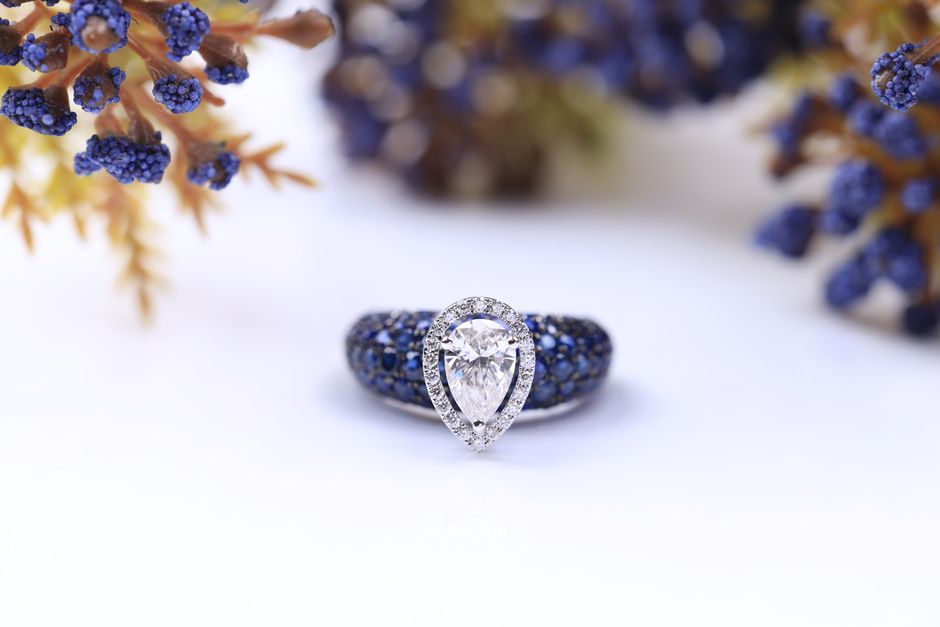
- One vivid center stone: Give a favorite birthstone a clean setting and let its color carry the design. A simple band can keep the overall look balanced.
- Two stones, one story: Pair two gemstones to represent partners, children, or meaningful dates. The stones don’t need to match in size or color to feel connected.
- A birthstone with a diamond accent: A small diamond or other accent stone can add contrast while keeping the colored gem as the focus.
- Color in an unexpected shape: Try a geometric cut or a sideways orientation if you like a more architectural silhouette.
- A subtle nod to the birth month: Use the birthstone as a side accent or hidden detail if you love its meaning but prefer a quieter look.
- Two-tone metal: Combining metal colors can help a ring work with jewelry you already wear, but view samples in person if you can.
One practical note: ring photos can make stones look larger or more saturated than they appear in person. Ask for the gemstone’s measurements, not just its carat weight, and compare those dimensions with the scale of your hand. If possible, see a similar stone in person before committing.
Personalized ring ideas that go beyond engraving
Customization can be as simple as choosing the stone and band together, or as involved as designing a ring from a sketch. Bespoke design is not only for people who already know exactly what they want. It can be a useful process for working out the details with a jeweler, especially when you’re balancing a particular gemstone with comfort, budget, and a wedding band.
Bring clear preferences, but leave room for expert input. You might say, “I love a deep green stone, low profile, and no sharp corners,” rather than arriving with a technical drawing. A good designer can translate that into options and explain the trade-offs. If a proposed design uses a delicate setting around a stone that needs more protection, ask how they’ll keep it secure.
For inspiration, create a few Pinterest boards for ring inspiration: one for stones and colors, one for settings, and one for designs you know you don’t want. Add notes about what you like in each image—perhaps the band width, the stone’s orientation, or the overall scale. This makes a jeweler consultation more useful than handing over a board of pretty pictures and saying, “Something like these.”
Brands and studios can be useful reference points, too. Bespoke Bride is a place to explore wedding inspiration and visual ideas, while a specialist jeweler such as Lily Arkwright may help you understand available styles and customization options. Modern Gents can be a reference for browsing more accessible ring styles. In every case, look past the product photography: read the specifications, clarify what customization actually includes, and ask direct questions about materials, sourcing, warranties, and aftercare.
Personalization can also be quiet. Consider engraving a date or phrase inside the band, choosing a meaningful metal, or adding a small detail on the underside. These touches can make the ring feel deeply yours without changing its appearance from across the room.
Ask the sourcing questions plainly
When a brand talks about a gemstone or metal, notice what it says—and what it leaves vague. “Ethical” is not a detailed sourcing explanation. Ask where the gemstone came from, whether it is natural or lab-grown, and what the jeweler can tell you about its supply chain. For metals, ask whether recycled or responsibly sourced options are available and how those claims are documented.
There may not be one perfect answer for every material, but a transparent seller should be willing to explain what they know, what they can verify, and where information is limited. If you get a polished slogan instead of a straight response, keep shopping. Your questions are reasonable, not awkward.
Budget is part of designing a good ring
Talking about budget doesn’t spoil the proposal. It helps you make choices with fewer surprises. Set a range before you browse, then ask which design decisions have the biggest effect on the price: the gemstone, its size and quality, the metal, or the amount of custom work.
If a particular stone or setting stretches the budget, ask about alternatives. You could change the stone dimensions, simplify the band, or consider a different gemstone with a similar color. Avoid pressure to spend more because a ring is supposed to prove something. A thoughtful ring is not measured by how much it costs.
Get the important terms in writing before placing an order: stone details, metal type, sizing, return or resizing policies, production timing, and what happens if a repair is needed. Custom work may have different return conditions from ready-to-ship designs, so check before paying a deposit.
Decision Questions to ask Why it matters Gemstone What is the stone, where is it sourced, and how should it be cared for? Helps you understand its story and everyday needs. Setting How high does it sit, and how is the stone protected? Affects comfort, security, and snagging. Band Can I try it with a wedding band, and how does it feel between my fingers? Shows how the set may wear and feel together. Custom order What is included, when is it due, and what are the return or resizing terms? Sets expectations before the ring is made.Make the ring—and the planning—feel like yours
A birthstone engagement ring works best when it reflects the person who https://www.bespoke-bride.com/2025/10/09/how-to-choose-an-engagement-ring-thats-as-unique-as-your-love-story/ will wear it, not someone else’s idea of what an engagement ring should look like. Choose a stone with a story you love, a setting that suits your daily life, and a design you’ll still enjoy when the trend cycle has moved on.
And once the ring conversation turns into wedding planning, keep the logistics simple where you can. For example, if an invitations promo includes guest tracking or RSVP management, a Google Sheet for RSVPs can help you keep responses, meal choices, and follow-up notes in one place. It isn’t glamorous, but neither is realizing you’ve lost the only list of dietary requirements.
Whether you choose a single vivid gemstone, a pair of stones, or a subtle birth-month detail, the most grown-up choice is the one made with care: for the wearer’s comfort, for your budget, and for the materials behind the sparkle.