Best Laptop Bag for a 15-Inch Laptop and Lots of Paperwork
The best bag for a 15-inch laptop and southwest personal item policy a thick stack of paperwork is not necessarily the one with the biggest laptop badge or the most pockets on its product page. It needs a laptop compartment that fits your actual computer, room for documents without bent corners, a manageable empty weight, and enough structure to look at home in a boardroom.
For frequent work travel, the choice usually comes down to three styles: a structured leather briefcase, a lighter nylon business bag, or a more casual twill or Cordura carry. Brands such as Von Baer, Tumi, and Briggs & Riley serve different corners of that market. Before comparing names, though, check the measurements that determine whether a bag will work on Monday morning: the laptop sleeve’s usable dimensions, the paperwork compartment’s capacity, and the bag’s empty weight.
Quick Answer: What to Look for
- For a formal boardroom look: Consider a structured full-grain leather briefcase, but weigh it before loading it. Leather can make a bag feel polished and substantial; it can also add pounds.
- For frequent airport use: Look at ballistic nylon or Cordura options with a luggage pass-through, comfortable handles, and an adjustable shoulder strap.
- For paperwork-heavy days: Prioritize a full-width document compartment and an expandable compartment you can open when carrying reports, a notebook, or a change of clothes.
- For a reliable 15-inch fit: Compare the laptop’s actual width, depth, and thickness with the sleeve’s interior measurements—not just the label on the bag.
First, Check Whether Your 15-Inch Laptop Actually Fits
“Fits a 15-inch laptop” is not a complete measurement. The inch rating refers to the screen diagonal, not the computer’s outside dimensions. Two laptops with 15-inch screens can differ in width, depth, thickness, bezel design, and corner shape. A protective case adds still more bulk.
Measure your laptop at its widest and deepest points, including any case you plan to leave on. Then compare those numbers with the bag’s interior laptop-sleeve dimensions. Exterior bag measurements are not a substitute: padding, seams, dividers, and lining reduce usable space. If a manufacturer gives only an outside measurement or says the bag “fits most laptops,” treat that as a reason to ask for clarification—not as a guarantee.
A practical fit check
- Measure the laptop’s width, depth, and thickness, with its everyday case installed.
- Look for the sleeve’s interior measurements. Confirm that all three dimensions allow a little clearance.
- Check the opening. A sleeve may be wide enough inside but too narrow at the zipper or padded edge.
- Read the return policy and, if possible, test the fit with your laptop before removing tags.
A snug sleeve can keep a computer from shifting, but it should not require forcing the laptop past a zipper or compressing its corners. If the bag has a suspended or padded laptop compartment, check how it closes and whether it protects the base when the bag is set down. Those details matter more than a large screen-size claim.
Paperwork Capacity: Measure the Workload, Not the Pocket Count
For a real A4 paper carry, check the dimensions of the document section rather than relying on a photo of a folder next to the bag. A4 sheets measure 210 by 297 millimeters. A letter-size document is wider and slightly shorter, so North American travelers carrying both formats should verify that each sits flat without curling at the corners.
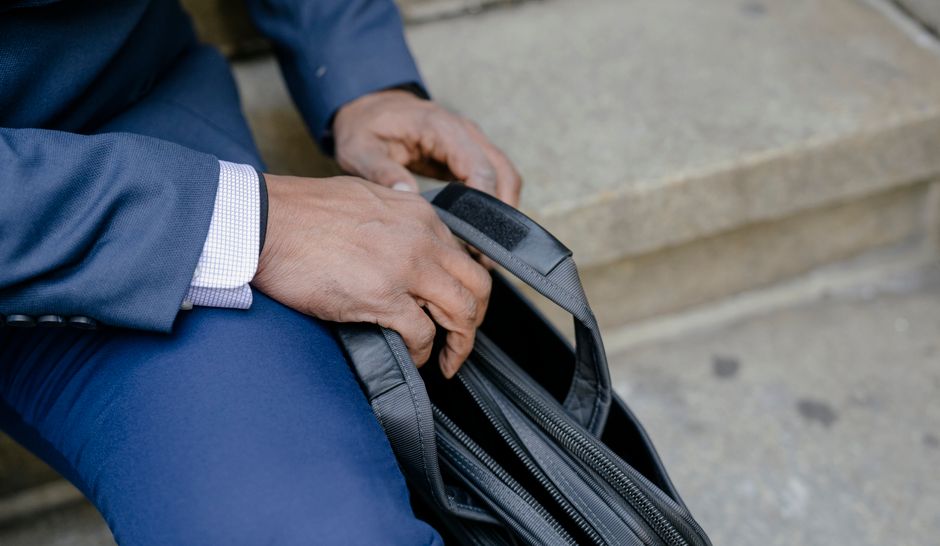
Think about what “lots of paperwork” means for your day. A slim folder of client notes takes less room than a binder, presentation deck, notebook, charger, and printed contracts together. Paper also competes with the laptop compartment for depth. A bag that holds a laptop and a few sheets separately may become awkward once you add a full portfolio and a water bottle.
Look for a document compartment that spans the bag’s width and is separated from bulky accessories. A wide, flat section helps keep papers straight. An expandable compartment is useful when your return trip includes extra handouts or a report folder, but expansion should not turn the bag into an unwieldy box. Check whether it adds usable depth or merely creates a narrow gusset.
Count usable pockets, not advertised pockets
Marketing may count every sleeve, pen loop, and tiny slip pocket as a separate feature. For a work bag, focus on the pockets you can reach and use while the bag is full. A practical arrangement might include a document section, a secure pocket for a passport or wallet, a quick-access pocket for a phone, and a place for chargers that does not press against paper or the laptop.
Too many internal dividers can reduce the main compartment’s usable space. If you carry a thick portfolio, prioritize open volume and a few purposeful pockets over a long pocket list.
Empty Weight and Comfort: The Spec to Check Before You Fall for the Look
Always check the bag’s empty weight before praising its materials or construction. A heavy bag can feel impressive on a product page and exhausting after a terminal transfer. Add a 15-inch laptop, power adapter, paperwork, and daily essentials, and even a modest difference in bag weight becomes noticeable.
Compare weights in the same units, and confirm whether the listed figure includes a shoulder strap or removable accessories. If a brand does not publish an empty weight, ask customer service. A missing weight is not a small omission for a travel bag; it makes it harder to judge how much capacity you are carrying before packing a single document.
Comfort depends on more than weight. Check the width and padding of the shoulder strap, whether it stays on your shoulder, and whether the handles feel comfortable when the bag is loaded. A luggage pass-through can make airport walks easier when you are rolling a suitcase, but it does not replace a comfortable carry option once you leave the terminal.
Structure and Style: Boardroom Briefcase or Travel Workhorse?
A structured briefcase holds its shape, protects the look of your paperwork, and presents a more formal profile in client meetings. That shape can come from the material, internal reinforcement, or both. It is useful when you want the bag to stand neatly beside a conference-room chair, but structure can add weight and may limit how much oddly shaped gear you can pack.
A softer business bag is often easier to fit under a seat or into a crowded overhead bin, though it work bag for weekly flights may slump when half full. For a polished middle ground, look for clean lines, restrained hardware, a stable base, and a separate laptop sleeve. Von Baer is a natural name to consider if you want a luxury leather briefcase; Tumi and Briggs & Riley are also familiar options for business travelers comparing travel-oriented designs. Compare the individual model specifications rather than assuming every bag from a brand shares the same weight, capacity, or layout.
Materials: Full-Grain Leather vs. Ballistic Nylon vs. Cordura vs. Twill
Material Typical appeal What to check Full-grain leather Refined appearance and a material that can develop character with use Empty weight, finish, care requirements, and clear construction details Ballistic nylon Practical, travel-oriented look and a reputation for abrasion resistance Fabric specification, coating, lining, and the finished bag’s weight Cordura Durable-feeling fabric options used in bags and outdoor gear Exact fabric type and denier; the Cordura name alone does not tell you the whole build Twill A woven texture that can look less technical than some nylon fabrics Fiber content, weave, lining, and how the fabric handles scuffs and moistureFull-grain leather is a category of leather, not a promise that every product will age or perform identically. Tanning, finishing, thickness, and construction all matter. If the product page does not explain the leather and lining, ask before buying. Wikipedia’s references on leather grades and leather terminology can provide background, but a maker’s specific material description is more useful when comparing two bags.
Ballistic nylon is a fabric designation associated with a particular type of nylon weave, but the phrase does not tell you every detail of a bag’s fabric or finish. Likewise, Cordura covers a range of textile products and should not be treated as a single weight or construction. Denier is a measure used to describe fiber or yarn thickness; it can help provide context, but a higher number alone does not prove that a finished bag is tougher or better made. See Wikipedia’s denier references for a basic explanation.
Ask for the shell material, lining material, and empty weight. I would not treat “premium lining” as a specification. If a brand omits the lining material, you cannot tell whether the interior is designed to protect papers, clean easily, or simply look good in product photos.
Price Example: What Luxury Leather Costs
As a price reference, the Von Baer City Large Leather Laptop Bag is listed at $1,795. The stated note for this example is that Von Baer never runs sales or discounts, per the article. At this price, judge the bag on its actual dimensions, empty weight, leather and lining details, construction, warranty, and return terms—not on the assumption that a premium price automatically means it is the best fit for your laptop or paperwork.
Before ordering, confirm that the exact City Large model fits your computer by its internal sleeve measurements, and establish how much usable room remains for a document folder. Luxury materials may suit a formal office, but they do not excuse missing practical specifications.
Airline Fit: Don’t Confuse a Briefcase with a Guaranteed Personal Item
A laptop briefcase may work as your personal item, but airline rules and enforcement can change, and the packed bag’s shape matters. Check the current Southwest carry-on baggage policy page before traveling. Compare the airline’s published requirements with the bag’s outside dimensions, including handles, pockets, and any expansion section you plan to use.
Do not assume that a bag marketed as “under-seat” will fit every seat or aircraft. A fully packed expandable compartment can make the bag deeper than its standard measurements suggest. For work trips, leave enough flexibility to compress a soft-sided bag without crushing the laptop or bending your documents.
How to Choose the Best 15-Inch Laptop Briefcase for Your Routine
- Start with the laptop: Verify sleeve width, depth, thickness, and opening clearance using your computer with its case.
- Size the paper section: Check whether it carries A4 and letter-size documents flat, and whether your portfolio or binder fits too.
- Compare empty weight: Look at the bag’s weight before packing. If it is not listed, request it.
- Inspect the layout: Count only accessible, useful pockets and make sure the document compartment is not crowded by accessories.
- Choose the material for the job: Leather favors a more formal look; nylon, Cordura, and twill may suit a travel-heavy routine. Compare exact construction and care requirements.
- Check travel dimensions: Review Southwest’s current policy and any other airline’s rules you use. Measure the bag in its expanded and packed state.
Bottom Line
The best 15-inch laptop briefcase for paperwork is the one that fits your specific laptop, carries your documents flat, and stays comfortable after you add the rest of your workday. A structured leather bag can make a strong boardroom impression; a ballistic nylon, Cordura, or twill option may be easier to live with on frequent flights. Von Baer, Tumi, and Briggs & Riley are useful brands to compare, but the deciding evidence is model-specific.
Before buying, confirm the sleeve’s interior dimensions, the document section’s usable space, the empty weight, and the lining material. Then check the airline policy and the bag’s expanded measurements. Those unglamorous details—not a screen-size claim or a long list of pockets—are what separate a good-looking briefcase from one that works for a full day of meetings and travel.